

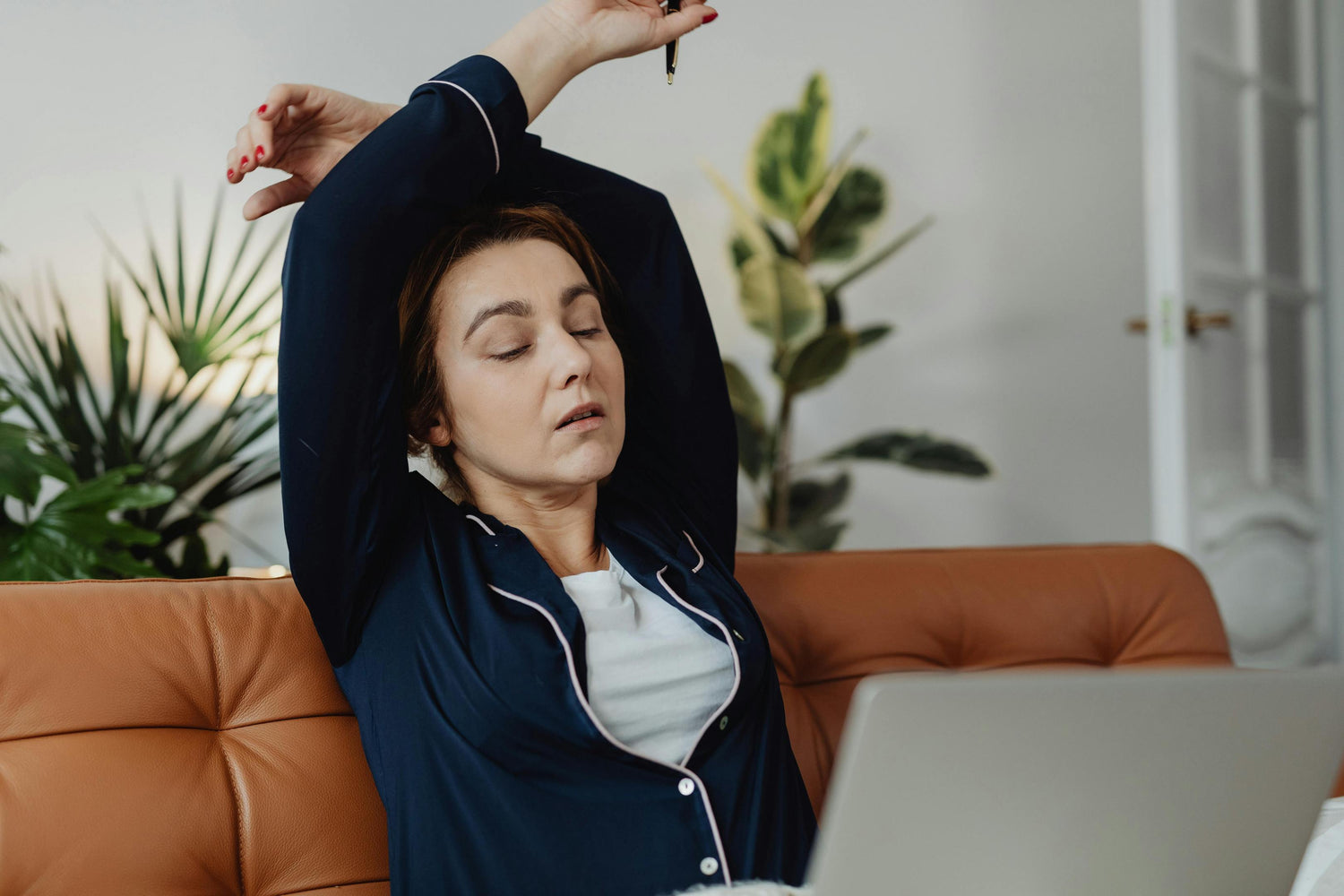
When epidemiologists study things that lead to longer lives, a clear pattern shows up: moving more buys you roughly twice as many life‑years as sitting less. But there is a catch. Exercise takes time and for many a gym membership, while “sitting less” is just a habit that can be developed. This asymmetry is where the low hanging fruit can be gathered. And there’s a hack to minimize sitting without getting up from your chair.
Exercise is unquestionably the most important thing we can do to lead longer, healthier lives. I would write a prescription for “exercise” for every patient leaving my clinic if it were possible. Large cohort studies that follow thousands of people for many years let us compare results for the “very active” with “very inactive” on the metric that matters most: added years of life. For example, in one pooled analysis of more than 650,000 adults, people who reported no leisure activity had the shortest life expectancy, while those in the highest activity category (over 400 minutes a week of brisk walking or equivalent) lived about 4–5 years longer1. And even modest movement helped; just getting the recommended guideline of 150–300 minutes per week added about 3–4 years of life expectancy. A little more math perhaps makes the message even simpler: every minute spent exercising adds 2 or 3 minutes to one’s lifetime.
So, the science is clear: if you’re willing to invest the effort, exercise is the most powerful way to add years to one’s life
Sedentary behavior, on the other hand, clearly shortens our lives. In epidemiological studies that carefully control for how much people exercise as well as other factors the lives of those who sat the most were shortened by two years.1
And, unfortunately, exercise doesn’t undo the harm caused by passive sitting.2 This last fact may seem counterintuitive, but it turns out that when held up by the elaborate supports provided an ergonomic chair one’s postural and leg muscles become electrochemically inactive, a biochemical change that dramatically reduces glucose uptake and triglyceride clearance, changes that together impair insulin sensitivity and lipid metabolism that daily exercise cannot reverse. Additionally, uninterrupted bouts of sitting reduces shear stress on vessel walls in the legs, promoting endothelial dysfunction as well as low grade inflammation.
So overall, moving from very inactive to very active might buy you 4–5 extra years, while moving from very sedentary to much less sedentary might buy you around 2 years. So, we can say that exercise is roughly twice as powerful as avoiding sitting in terms of life‑years.
Note, however, that while the life‑year payoff from exercise is larger, the behavioral friction is also higher. Yes, the payoff from exercise is greater, but it also requires carving out time for a trip to the gym or a run, and possibly recovery time, showering, and maybe a nap.
By contrast, “sitting less” is simply a matter of simply changing how you habitually sit. Because it turns out much of the harm caused by sitting is due to long bouts of uninterrupted sitting. So, while sitting less is important, just sitting for shorter periods can largely undo the harms of sitting. The change can be as simple as taking a few five-minute walks in the course of a work day, or perhaps taking phone calls while pacing in one’s office rather than rooted in a chair.3
And here’s a hack: Sitting typically involves a standard, elaborately supported “ergonomic” office chair. One sits with their pelvis parked and their spine propped up by a back rest and a lumbar support. This setup, by design, switches off almost all muscles.
But sitting does not have to mean being still. Chairs that slightly destabilize the pelvis and invite small, continuous postural adjustments are now available that make sitting active rather than passive. These chairs don’t turn desk work into a workout, but they do convert otherwise sedentary time into something closer to light‑intensity physical activity, the very domain that accelerometer studies identify as strongly protective of lifespan.4
Conveniently, active sitting doesn’t require you to get up from your desk. Rather, you can embed micro‑movements into your seated time. You are still “sitting,” but you aren’t sitting still: your musculoskeletal system is no longer just idling, but is fully engaged.
This sort of “active rest” posture has been identified by anthropologists as critical to the health of hunter/gather tribes. These tribes don’t have furniture of any sort, of course, but they do need a resting posture, and for this they choose to squat, rather than sit, on the ground. Careful work by Daniel Lieberman at Harvard has documented the metabolic advantages of squatting as an “active rest” posture. He suggests that we in the modern Western world should all “try to find ways to sit more actively without being inert for too long, squirm shamelessly…”. Most of us won’t be able to work the squatting posture of our hunter/gatherer forbears into our office routine, but an active sitting chair is a pretty easy substitution to make.5
In summary, exercise provides the biggest boost to lifespan. If you can get from “hardly moving” to “regularly exercise,” you may gain 4–5 years of life. But the low‑hanging fruit is to simply sit less, sit for shorter periods, or possibly make your sitting more active. You’ll be able to reap real health benefits without blocking out an hour for the gym or paying for a gym membership.
And of course, there’s not need to choose between exercise and sitting less. The effects are additive, so the best plan is to both move more and sit less, or at least sit differently: shorter bouts, more interruptions for “exercise snacks”6, and perhaps trying an active chair that will make all your sitting time less sedentary.
1 Katzmarzyk, P. T., & Lee, I. M. (2012). Sedentary behaviour and life expectancy in the USA: a cause-deleted life table analysis. BMJ Open, 2(4), e000828. https://doi.org/10.1136/bmjopen-2012-000828
2 Patel, A. V., Bernstein, L., Deka, A., Feigelson, H. S., Campbell, P. T., Gapstur, S. M., Colditz, G. A., & Thun, M. J. (2010). Leisure time spent sitting in relation to total mortality in a prospective cohort of US adults. American Journal of Epidemiology, 172(4), 419-429. https://doi.org/10.1093/aje/kwq155
3 Sitting all day can be deadly: 5-minute walks can offset harms. (2023, January 12). NPR. https://www.npr.org/sections/health-shots/2023/01/12/1148503294/sitting-all-day-can-be-deadly-5-minute-walks-can-offset-harms
4 Ekelund, U., Tarp, J., Steene-Johannessen, J., Hansen, B. H., Jefferis, B., Fagerland, M. W., Whincup, P., Diaz, K. M., Hooker, S. P., Chernofsky, A., Larson, M. G., Spartano, N., Vasan, R. S., Dohrn, I. M., Hagströmer, M., Edwardson, C., Yates, T., Shiroma, E., Anderssen, S. A., & Lee, I. M. (2019). Dose-response associations between accelerometry measured physical activity and sedentary time and all cause mortality: Systematic review and harmonised meta-analysis. The BMJ, 366, l4570. https://doi.org/10.1136/bmj.l4570
5 Osler, T. (2021, December 30). Could simply changing your chair add years to your life? Medium. https://turneroslermd.medium.com/could-simply-changing-your-chair-add-years-to-your-life-2621f326b27c
6 Islam, H., Gibala, M. J., & Little, J. P. (2022). Exercise snacks: A novel strategy to improve cardiometabolic health. Exercise and Sport Sciences Reviews, 50(1), 31-37. https://doi.org/10.1249/JES.0000000000000275


Leave a comment
All comments are moderated before being published.
This site is protected by hCaptcha and the hCaptcha Privacy Policy and Terms of Service apply.