

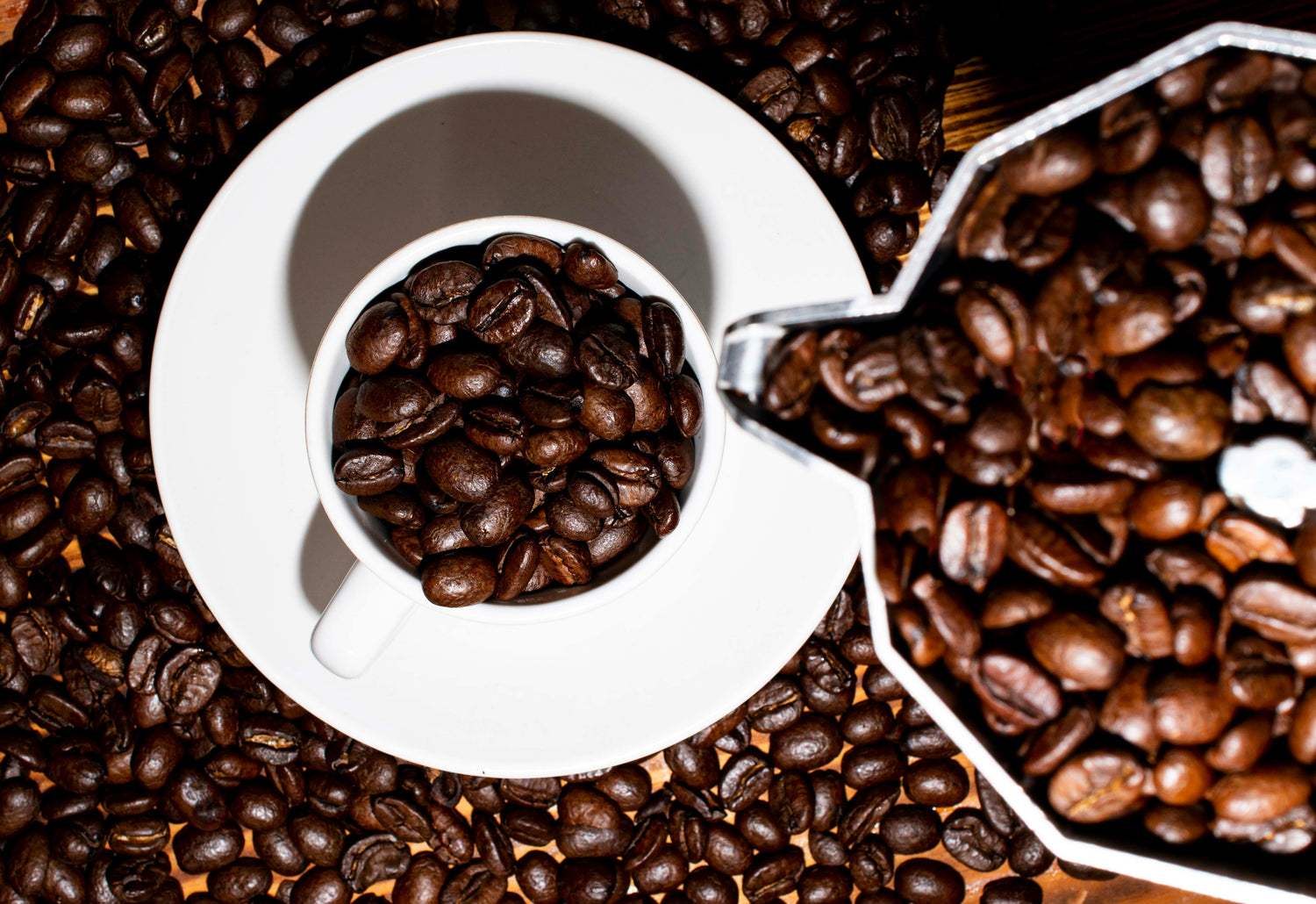
Caffeine is perhaps the most brilliant bit of alchemy plants ever performed, but it took them a while. This little molecule was added to plants’ pharmacopeia just a few million years ago, an eyeblink in evolution. And then suddenly several different species independently discovered just how useful caffeine could be. Coffee, tea, chocolate, and kola nuts, all used caffeine both as a pesticide (it is toxic to insect nervous systems) and at lower doses as an inducement to encourage pollinators to make repeated visits to mildly caffeinated flowers.1 Because insects are such a big part of a plant’s world, the ability to control insects was a breakthrough for the ages.
Importantly, caffeine doesn’t just control the behavior of insects. Humans too can be manipulated by this unassuming little molecule.
The fact that caffeine works on humans as well as insects isn’t as surprising as it might seem, because the same chemical machinery that makes insect brains work also underpins human brain function. We can’t be sure how caffeine makes bugs feel (do bugs even have feelings?), but in humans, caffeine increases alertness by blocking the effect of adenosine, a sleep-promoting molecule. Because caffein tightly binds to adenosine receptors without actually activating them, it blocks adenosine’s "slow down" signal that ordinarily builds throughout the day2. This results in two downstream effects: a dopamine surge that boosts mood, and a norepinephrine surge that helps to increase focus and energy.3
The overall effect is that caffeine increases alertness, reduces fatigue, and brings on a mild sense of euphoria. On the flip side, an overdose of caffeine can noticeably raise one’s heart rate and create an unpleasant sense of anxiety and jitteriness. The time course of caffeine’s effects is variable, because some people are genetically fated metabolize caffeine much more quickly than others; the half-life a dose of caffeine can be as little as two or as long as 10 hours; being on oral contraceptives can double this baseline timeframe. Also, never give a newborn caffeine, because in these tiny folks the half-life is measured in days.
Caffeine boosts not only mood but also metabolism generally. By increasing circulating catecholamine levels, caffeine can transiently increase resting metabolic rate by as much at 4%, burning the equivalent of an apple (around 50 calories) for each cup of coffee consumed.4 The effect is large enough to sell some diet books (e.g. The Coffee Lover's Diet"; Bob Arnot, MD, 2017), and power at least one meta-analysis.5
Caffeine can also improve athletic performance by raising heart rate by 5 to 15 beats/minute as well as by increasing stroke volume.6 Additionally, caffeine mobilizes free fatty acids, enhancing endurance and pain tolerance. These advantages were felt significant enough that caffeine was banned from the Olympics) as a “performance enhancing drug” for two decades (1984-2004. During caffeine’s banned years urine from athletes was screened for caffeine looking for levels over 12 mcg/ml (roughly 6-8 espressos) hoping to curb ergogenic abuse while allowing "social" use of caffeine7. Unfortunately, in practice the genetic variability in caffeine metabolism made enforcement impossible: one person's casual cup of coffee could actually exceed another's doping dose. The ban was dropped it in 2004, though it is still monitored.8

Coffee's Health Connection
I’ve dwelt on caffeine because it’s a relatively simple molecule with well understood effects. Coffee itself is a much more complicated brew than simply caffeine in a cup, however. It is also the source of over 1,000 other chemical compounds9. Only a handful of these have had their health effects studied. For example, chlorogenic acids have both anti-inflammatory and insulin-sensitizing effects; cafestol increases LDL and protects against cancer; trigonelline is neuroprotective. Perhaps surprisingly, the effects of the other 95% of these compounds simply haven’t been looked at in any detail.
Viewed through the lens of health outcomes, however, epidemiology sees coffee as a sort of longevity tonic. Meta-analyses link the consumption of 3-4 cups a day to 17% lower all-cause mortality and a 15% reduction in heart disease, as well as reductions in several cancers, including leukemia, as well as liver, endometrial, and prostate cancers.10 Caffeine may contribute to reducing cancer risks because it has significant anti-oxidant effects that serve to reduce free radicals. But because anti-cancer properties are seen in both caffeinated and decaffeinated coffee, the larger share of health effects seems due to compounds other than caffeine.
Coffee and Your Colon
Most coffee drinkers will have noticed, if not discussed, the effect of coffee on their colon. Coffee stimulates colonic motility within minutes of ingestion by triggering the hormones gastrin and cholecystokinin, both of which activate the gastrocolic reflex and boost colon contractions by about 50%. Although this effect is seen with decaffeinated coffee, caffeinated coffee increases this effect by directly stimulating the smooth muscle in the colon.11 This promotes peristalsis and evacuation, and explains coffee's popularity as a home remedy laxative.12 Lately coffee enemas have shown up on the internet, but this doesn’t seem like a winning strategy: caffeine is poorly absorbed by the colon13, and you miss out on the sensory pleasures of drinking coffee in the more usual way. Additionally, serious adverse effects have been reported, including everything from rectal burns (coffee too hot) to colonic perforation. At least one fatality has been reported.14
What About Milk and Cream?
Coffee is a wonder drug, but the details of dosing matter. Amount, timing, genetics, and what you add to your coffee all affect the effectiveness of coffee. Milk and cream are popular additions to coffee because the casein proteins present in milk bind the bitter chlorogenic acids in coffee. Unfortunately, this reduces the bioavailability of these compounds by as much as 50%15 as well as dulling antioxidant spikes. The fat and protein in milk also delays gastric emptying compared to drinking straight black coffee, smoothing caffeine's absorption curve. Plant “milks” also blunt coffee’s effects, but less than dairy milk.
Caffeine in the Work Place
While the use of performance enhancing drugs has generally be discouraged in the workplace, caffeine has been embraced by employees as a way to stay awake and possibly make work a little more enjoyable. And employers seem to view caffeine as a good investment in productivity: Industry surveys suggests that most US offices provide coffee as a perk, with a multi-billion-dollar spend on office coffee services. And for those who work from home, techniques borrowed from the trucking industry are making inroads. The “nappuccino” (coffee followed by a 30-minute nap) improve alertness and performance better than either intervention alone.16
The Plant That Bio-Hacked Humanity
The story of caffeine is usually framed as just one more example of humans exploiting plants for our benefit. But we might well ask, “Just who’s using whom?” Think on this: while we’ve been enjoying the coffee plant, this clever shrub quietly harnessed human effort and ingenuity to spread itself around the globe. Coffee's big play has conned humanity into devoting an area the size of Maine to coffee cultivation, far greater success that the coffee plant could ever achieve on its own. Of course, this is just scaling up the ancient strategy of attracting pollinators with a tease of caffeine, but one has to wonder it was somehow what the coffee plant had in mind all along.
So, when your bleary-eyed office mate says he’s “a slave to coffee”, he may be closer to the truth than he suspects, reeled in by the coffee plat just as easily those mindless insects.
1 Temple, J. L., Bernard, C., Lipshultz, S. E., Czachor, J. D., Westphal, J. A., & Mestre, M. A. (2017). The safety of ingested caffeine: A comprehensive review. Frontiers in Psychiatry, 8, Article 80. https://doi.org/10.3389/fpsyt.2017.00080
2 Chen, J., Zhu, Y., Hu, L., Li, H., Kang, Q., Liu, Y., Zhang, R., Lin, H., Ye, J., Lin, D., Wu, R., Wen, Y., & Liu, X. (2015). The relationship between the p.V37I mutation in GJB2 and hearing phenotypes in Chinese individuals. PLOS ONE, 10(6), Article e0129662. https://doi.org/10.1371/journal.pone.0129662
3 Hill, J., Pickles, A., Wright, N., Quinn, J. P., Murgatroyd, C., & Sharp, H. (2019). Mismatched prenatal and postnatal maternal depressive symptoms and child behaviours: A sex-dependent role for NR3C1 DNA methylation in the Wirral Child Health and Development Study. Cells, 8(9), Article 943. https://doi.org/10.3390/cells8090943
4 Zimmers, Z. A., Boyd, A. D., Stepp, H. E., Adams, N. M., & Haselton, F. R. (2021). Development of an automated, non-enzymatic nucleic acid amplification test. Micromachines, 12(10), Article 1204. https://doi.org/10.3390/mi12101204
5 Tabrizi, R., Saneei, P., Lankarani, K. B., Akbari, M., Kolahdooz, F., Esmaillzadeh, A., Nadi-Ravandi, S., Mazoochi, M., & Asemi, Z. (2019). The effects of caffeine intake on weight loss: A systematic review and dose-response meta-analysis of randomized controlled trials. Critical Reviews in Food Science and Nutrition, 59(16), 2688–2696. https://doi.org/10.1080/10408398.2018.1507996
6 Hamad, A. K. S. (2024). Caffeine and arrhythmias: A critical analysis of cardiovascular responses and arrhythmia susceptibility. Journal of the Saudi Heart Association, 36(4), 335–348. https://doi.org/10.37616/2212-5043.1402
7, 8 Patton-López, M. M., López-Cevallos, D. F., Cancel-Tirado, D. I., & Vazquez, L. (2019). Pathways from food insecurity to health outcomes among California university students. PubMed Central. https://pmc.ncbi.nlm.nih.gov/articles/PMC6627945/
9 Sualeh, A., Tolessa, K., & Mohammed, A. (2020). Biochemical composition of green and roasted coffee beans and their association with coffee quality from different districts of southwest Ethiopia. Heliyon, 6(12), Article e05812. https://doi.org/10.1016/j.heliyon.2020.e05812
10 Poole, R., Kennedy, O. J., Roderick, P., Fallowfield, J. A., Hayes, P. C., & Parkes, J. (2017). Coffee consumption and health: Umbrella review of meta-analyses of multiple health outcomes. BMJ, 359, Article j5024. https://doi.org/10.1136/bmj.j5024
11 Iriondo-DeHond, A., Uranga, J. A., Del Castillo, M. D., & Abalo, R. (2021). Effects of coffee and its components on the gastrointestinal tract and the brain–gut axis. Nutrients, 13(1), Article 88. https://doi.org/10.3390/nu13010088
12 Brown, S. R., Cann, P. A., & Read, N. W. (1990). Effect of coffee on distal colon function. Gut, 31(4), 450–453. https://doi.org/10.1136/gut.31.4.450
13 Teekachunhatean, S., Tosri, N., Rojanasthien, N., Srichairatanakool, S., & Sangdee, C. (2013). Pharmacokinetics of caffeine following a single administration of coffee enema versus oral coffee consumption in healthy male subjects. ISRN Pharmacology, 2013, Article 147238. https://doi.org/10.1155/2013/147238
14 Son, H., Song, H. J., Seo, H. J., Lee, H., Choi, S. M., & Lee, S. (2020). The safety and effectiveness of self-administered coffee enema: A systematic review of case reports. Medicine, 99(36), Article e21998. https://doi.org/10.1097/MD.0000000000021998
15 Duarte, G. S., & Farah, A. (2011). Effect of simultaneous consumption of milk and coffee on chlorogenic acids' bioavailability in humans. Journal of Agricultural and Food Chemistry, 59(14), 7925–7931. https://doi.org/10.1021/jf201906p
16 Reyner, L. A., & Horne, J. A. (1997). Suppression of sleepiness in drivers: Combination of caffeine with a short nap. Psychophysiology, 34(6), 721–725. https://doi.org/10.1111/j.1469-8986.1997.tb02148.x

2 comments
Joe strain
I have been using your chairs for years. I find it very comfortable for meals and sitting around having coffee.
Thanks for the link to Lars Alexander that’s an incredible video.
Please add me to your blog video list it’s been very interesting. Thank you.
Joe
Irene G Hall
I read this as I sipped my morning coffee. Very interesting. I learned so much more about coffee.
Leave a comment
All comments are moderated before being published.
This site is protected by hCaptcha and the hCaptcha Privacy Policy and Terms of Service apply.