

Falls are responsible for 2% of deaths among older Americans, and this number continues to increase despite advances in medical care. Preventing falls is an obvious solution, but requires a multilayered approach, from the mundane (install handrails on stairs and in bathtubs) to the miraculous (robot angels that intervene if a human starts to fall). For the moment, however, helping people to maintain strength and balance as they age is the most promising, and challenging, approach to fall prevention. As Benjamin Franklin observed 300 years ago "An ounce of prevention is worth a pound of cure."
I trained as a surgeon in the 1970s, and at that time a broken hip in an elderly patient was often a death sentence. This sounds bad, but it was actually worse because falls rarely killed anyone immediately. Instead, because the patient couldn’t walk, they would be confined to a hospital bed. And then over weeks or months as we waited for their fracture to heal, pneumonia or bed sores or both would quietly end a life.
Fifty years later I failed to catch my mother when she stumbled on a walking street in Burlington, Vermont. Her fall broke her hip, but by then surgeons had gotten much better at treating hip fractures. We had her in the operating room within hours, and she was out of the hospital and walking on a new hip implant the next day. Which felt like a great success. But with the benefit of hindsight even in this best-case scenario when everything goes perfectly the surgery and rehab were uncomfortable and expensive.
So, what’s even better than “everything going perfectly”? Not having a broken hip in the first place.
The Numbers Are Alarming — With a Catch
At first glance the epidemiology of low falls looks grim. Deaths from falls among the elderly have more than quadrupled since 1999 and now caused over 40,000 deaths each year.1 For context, that’s about the same as the number of deaths caused by gunshot wounds or by drug overdoses.

While these raw death counts are striking, they don’t reflect failed or inadequate medical care. A big part of that rise is simply that there are more "oldsters" alive today than in 2000 — the population 65 and older has almost doubled since then. So, much of this increase is simply the result of doubling the number of people who might fall.
Age-adjusted mortality tells a more encouraging story. If we mathematically adjust for age, the death rate from hip fracture has actually fallen about 36 percent since 2000, reflecting advances in surgical technique and anesthesia.2

But even with these improvements in care, one-year mortality after a hip fracture is still on the order of 30 percent.3 Bottom line: surgery and anesthesia may have gotten better, but the falls themselves keep happening. And as our population continues to age, the number of falls, and deaths, will continue to increase. Improved after-the-fall medical treatments are important, but cannot solve this problem.
Only prevention can.
Step One: Fall-Proof Your House
The simplest, but least glamorous, intervention is also one of the best-studied: removing hazards from the physical environment. A review of 12 randomized trials found that home hazard modification programs — removing loose rugs, improving lighting on stairs and nighttime paths to the bathroom, installing grab bars in showers and tubs, securing handrails, clearing clutter and cords —reduced fall rates by 7%.4 But although 7% is a significant improvement, it’s obvious that the problem of falls can’t be solved simply by a home makeover.
Step Two: Train the Balance System Itself
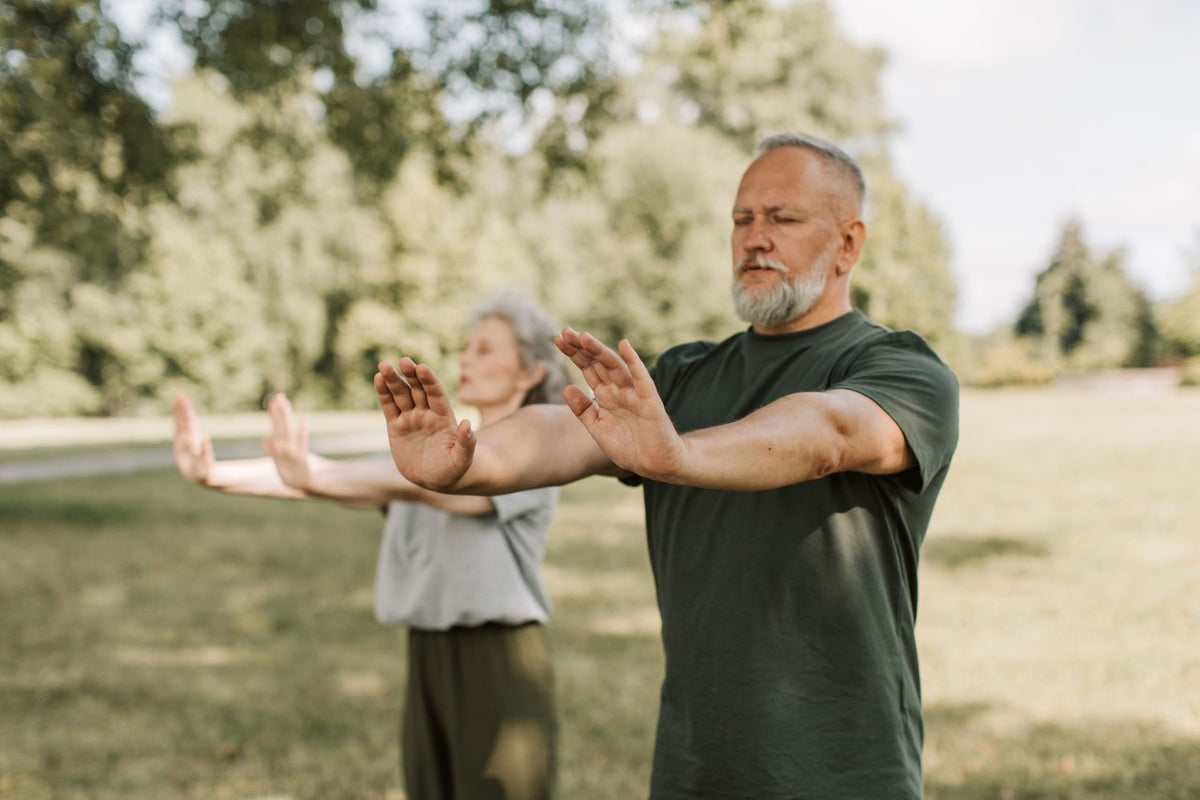
The most effective active intervention for fall prevention isn't a new idea. Rather, it’s the ancient practice of Tai Chi. A randomized controlled trial published in the Journal of Gerontology found that a six-month Tai Chi program reduced the risk of falls in older adults by 20%.5 And this finding has held up over time: a meta-analysis pooling 24 randomized controlled trials found Tai Chi reduces fall risk in older adults, with a relative risk around 0.80 compared with controls.6
Tai Chi is so effective because it trains the exact abilities that can prevent a stumble from becoming a fall: proprioception, weight-shifting, and especially lower-limb strength. Unfortunately, studying Tai Chi doesn’t provide lifelong protection against falls like some sort of movement vaccination. Instead, it’s a lifelong practice. To be effective people need a daily “dose” of Tai Chi, but the requirement is minimal: Just 7 minutes twice a day. The logic is straightforward. Train and strengthen the balance/rebalancing system before you need it, just as you'd train a muscle before a race, and you’ll be able to recapture your balance in the event of a stumble.
Step Three: On Beyond Balance With Experimental Tech
Modern technology has provided other possible ways to mitigate or prevent falls, some well proven and some more speculative.

A proven technology has simply been reconfigured to deal with falls is the decades old technology behind car airbags. Personal airbag protection for pilots, motorcyclists, and equestrians has been available for some time now, so it was a straightforward to create a “wearable” airbag that surrounds the hips and explosively inflates if an accelerometer detects an impending fall. Several such devices are now commercially available and sell for less than $1000. The oldest of these, the Hip'Guard, has been available for several years, is FDA approved, and in trials has been highly effective in preventing fractures if not falls. In one study the Hip’Guard device reduced hip fractures by 90%.7
A more imaginative approach aimed at actually preventing falls has been proposed by researchers at Keio University in Japan who created "Arque," a wearable robotic tail powered by artificial muscles which moves to help an out of balance person rebalance just as animals naturally rebalance by using their tails as counterweights. Worn at the waist, this robotic tail shifts in all directions to help a stumbling wearer recover balance rather than falling.8

One can also imagine a still more futuristic backup system: a personal humanoid robot that follows an older person from room to room as a “spotter,” much as a gymnastics coach shadows an athlete. Cameras and motion sensors could recognize the first fractions of a second of an unrecoverable stumble, then step in, and provide a strong arm to lean on or perhaps catch them mid-fall and then lower them safely to the floor. This sounds like science fiction, but robots are making great strides. Just this week in a moment that recalled Deep Blue’s chess victory over the then reigning champion Garry Kasparov, a robot ran 100 meters faster than Husain Bolt.9 Perhaps anticipating the rapid evolution of robot skills, MIT in 2024 applied to patent a “fall catching robot that autonomously follows a person” which, should a fall occur, “safely wraps around them and slowly and safely lowers the person to the floor”.10

The challenge remains to make such a robot reliable enough, and safe enough, to catch its owner rather than introducing one more charging cord to trip over.
While the airbag, the robotic tail, and the personal “robot spot” are remarkable engineering feats, all are at root workarounds that intervene after balance has been lost. In this sense they are all backup systems. It would be far preferable to never loose one’s balance at all, of course, but this involves improving human performance at balancing.
Doing the Work
But all balance training programs and Tai Chi practice require sustained effort. And unfortunately, even the most motivated people can find a daily practice challenging. Adherence is thus for many people Achilles' heel of a fall-prevention exercise strategy. In this view the problem becomes one of human engineering rather than mechanical engineering. How might we help people maintain a practice that improves and sustains their intrinsic ability to balance in a world that becomes increasingly difficult to navigate as we age?
A Workaround for Doing the Work?
Nearly everyone sits for many hours every day without having to remember to do it, simply because sitting has become the default posture for so much of our lives. So, the possibility of turning seated time into balance training time is an obvious opportunity.
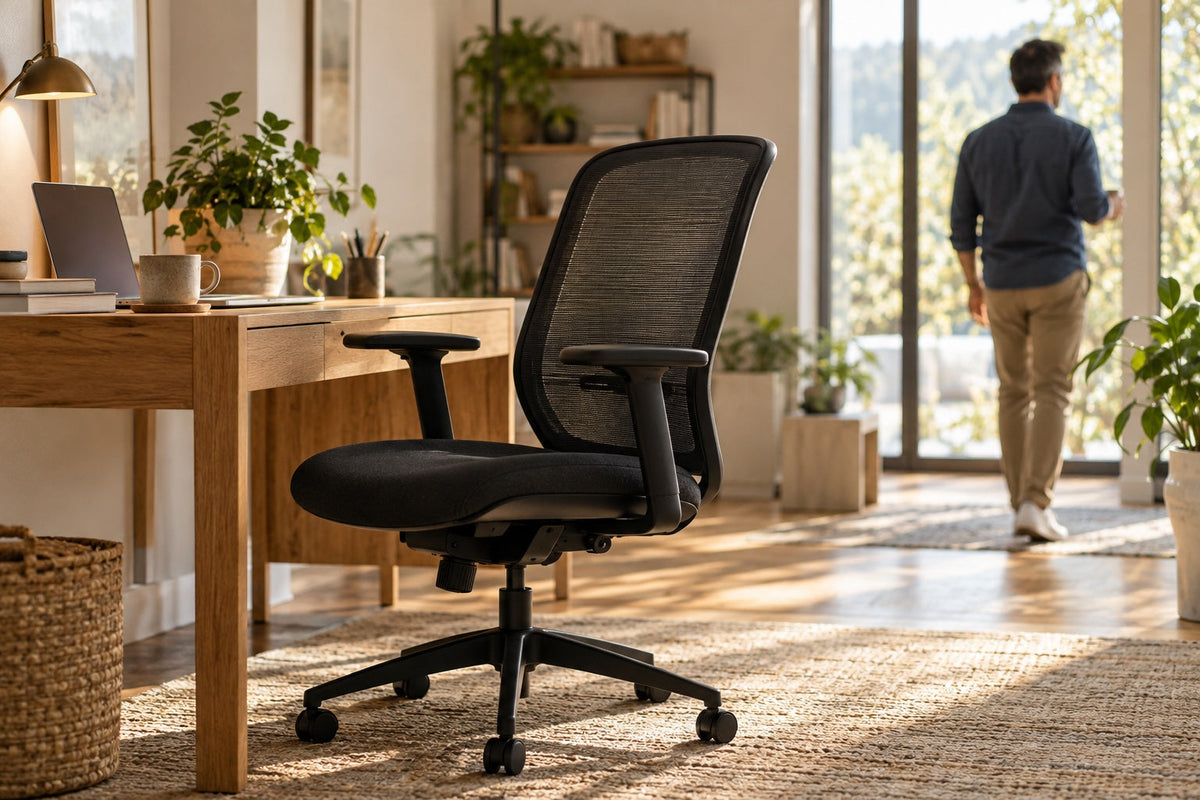
And this is where active sitting may have a role. A chair with a intentionally slightly unstable seat requires continuous small adjustments of the hips, core, and legs simply to stay seated upright. This way of sitting uses the same proprioceptive and postural-control reflexes that Tai Chi develops, but can be a part of the time most Americans spend sitting. This idea hasn’t been studied, but the underlying physiology is well established: aging is associated with impaired dynamic seated postural control and reduced trunk proprioception,11 mechanisms directly implicated in fall risk.12 Early, small-sample studies of instability-based training already improve fall-risk proxies — improved balance scores, faster functional mobility, and reduced fear of falling — compared with training on stable surfaces.13 All this suggests active sitting as a plausible candidate for future fall-prevention research.
So, while it’s much too soon to be sure, active sitting may eventually turn out to be one more tool in our fall prevention toolkit.
In the meantime, pick up things in the home that can trip you up and try out a Tai Chi class. Oh, and never get on a ladder.
References
1 Santos-Lozada, A. R. (2023). Trends in deaths from falls among adults aged 65 years or older in the US, 1999–2020. JAMA, 329(18), 1605–1607. https://doi.org/10.1001/jama.2023.3054
Garnett, M. F., Weeks, J. D., & Zehner, A. M. (2025, June). Unintentional fall deaths in adults age 65 and older: United States, 2023 (NCHS Data Brief No. 532). National Center for Health Statistics. https://www.cdc.gov/nchs/products/databriefs/db532.htm
2 Tayyab, M., Tanveer, M., Ahmad, Z., Khan, A. A., Syed, R., Shabir, M., Khan, A., Afridi, A., Ali, M., & Syed, F. (2025). Trends in hip fracture-related mortality among older adults in the United States from 1999 to 2023: A Centers for Disease Control and Prevention’s Wide-Ranging Online Data for Epidemiologic Research (CDC WONDER) analysis. Cureus, 17(8), e90305. https://doi.org/10.7759/cureus.90305
3 Downey, C., Kelly, M., & Quinlan, J. F. (2019). Changing trends in the mortality rate at 1-year post hip fracture: A systematic review. World Journal of Orthopedics, 10(3), 166–175. https://doi.org/10.5312/wjo.v10.i3.166
4 Lektip, C., Chaovalit, S., Wattanapisit, A., Lapmanee, S., Nawarat, J., & Yaemrattanakul, W. (2023). Home hazard modification programs for reducing falls in older adults: A systematic review and meta-analysis. PeerJ, 11, e15699. https://doi.org/10.7717/peerj.15699
5 Li, F., Harmer, P., Fisher, K. J., McAuley, E., Chaumeton, N., Eckstrom, E., & Wilson, N. L. (2005). Tai Chi and fall reductions in older adults: A randomized controlled trial. The Journals of Gerontology: Series A, 60(2), 187–194. https://doi.org/10.1093/gerona/60.2.187
6 Chen, W., Li, M., Li, H., Lin, Y., & Feng, Z. (2023). Tai Chi for fall prevention and balance improvement in older adults: A systematic review and meta-analysis of randomized controlled trials. Frontiers in Public Health, 11, 1236050. https://doi.org/10.3389/fpubh.2023.1236050
7 Stefanacci, R. G., & Kinosian, B. (2025). Mitigating hip injuries in high-risk older adults: Clinical evidence supporting FDA approval of a novel wearable airbag belt. Journal of the American Medical Directors Association, 26(11), 105851. https://doi.org/10.1016/j.jamda.2025.105851
DeviceNation. (2026, April 25). TangoBelt wearable airbag! [Video]. YouTube. https://www.youtube.com/watch?v=dH5mA3E5pvU
8 Nabeshima, J., Saraiji, M. H. D. Y., & Minamizawa, K. (2019). Arque: Artificial biomimicry-inspired tail for extending innate body functions. In ACM SIGGRAPH 2019 Emerging Technologies. Association for Computing Machinery. https://doi.org/10.1145/3305367.3327987
9 Paik, S. (2026, August 24). Chinese robot breaks Usain Bolt’s 100-meter record [Video]. The New York Times. https://www.nytimes.com/video/world/asia/100000011108916/100-meter-dash-humanoid-robot-games-usain-bolt.html
10 Kamienski, E., & Asada, H. H. (2025, June 12). Robotic systems and methods for assisting with user posture (International Patent Publication No. WO2025122728A1). World Intellectual Property Organization. https://patents.google.com/patent/WO2025122728A1/en
11 Park, D. S., Hwang, J. H., Chang, H. J., & Kwon, T. K. (2010). Seated postural control in elderly on unstable plate. Journal of the Korean Academy of Rehabilitation Medicine, 34(1), 59–65. https://www.e-arm.org/upload/pdf/Jkarm034-01-10.pdf
12 Appeadu, M. K., & Bordoni, B. (2023, June 4). Falls and fall prevention in older adults. In StatPearls. StatPearls Publishing. https://www.ncbi.nlm.nih.gov/books/NBK560761/
13 Rizzato, A., Bozzato, M., Rotundo, L., Zullo, G., De Vito, G., Paoli, A., & Marcolin, G. (2024). Multimodal training protocols on unstable rather than stable surfaces better improve dynamic balance ability in older adults. European Review of Aging and Physical Activity, 21, 19. https://doi.org/10.1186/s11556-024-00353-8
Pirauá, A. L. T., Cavalcante, B. R., de Oliveira, V. M. A., Beltrão, N. B., de Amorim Batista, G., Pitangui, A. C. R., Behm, D., & de Araújo, R. C. (2019). Effect of 24-week strength training on unstable surfaces on mobility, balance, and concern about falling in older adults. Scandinavian Journal of Medicine & Science in Sports, 29(11), 1805–1812. https://doi.org/10.1111/sms.13510
Granacher, U., Lacroix, A., Muehlbauer, T., Roettger, K., & Gollhofer, A. (2013). Effects of core instability strength training on trunk muscle strength, spinal mobility, dynamic balance and functional mobility in older adults. Gerontology, 59(2), 105–113. https://doi.org/10.1159/000343152

Leave a comment
All comments are moderated before being published.
This site is protected by hCaptcha and the hCaptcha Privacy Policy and Terms of Service apply.